

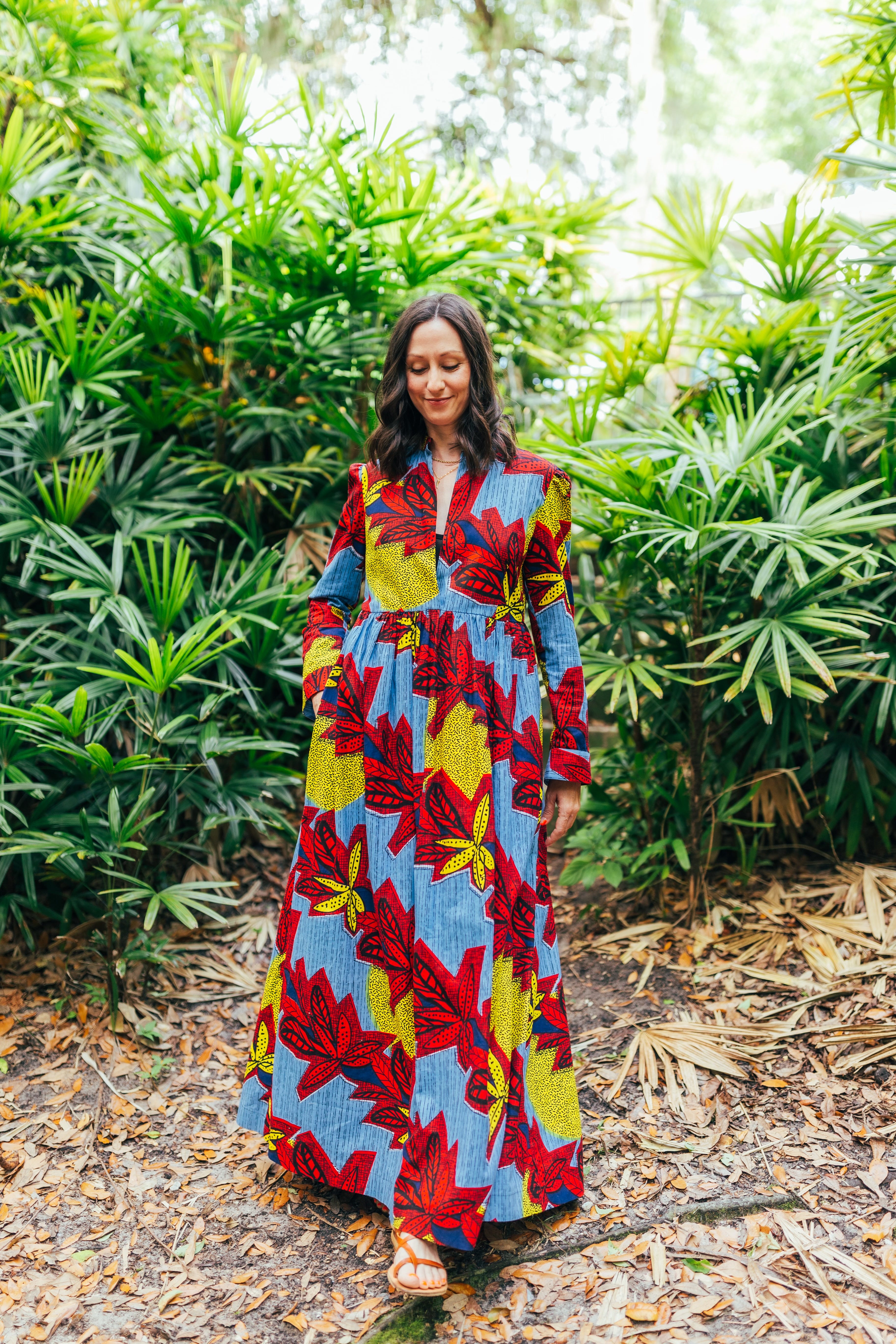
In 2014, the World Cup was in Brazil and later that same year, while I was working at the State Department in Washington DC, pop sensation Rihanna walked into the White House wearing a colorful, printed Stella Jean dress. It was exactly the type of look I would wear myself, polished, professional, yet vibrantly alive with color and print.
I haven’t lived in DC since 2020 but when I was there, it was not known as a fashion city. It’s a city of neutral-colored oftentimes ill-fitting suits and sensible shoes. There’s a weird sort of collective, unspoken agreement that standing out is a liability and if you care too much, it means you’re not serious about your job. I never gave a shit. My very Florida self, inspired by diversity of cultures from around the world, especially the Caribbean, showed up every day in color, in print, in textures, with my 4 inch heels, and I definitely got the side eye. So when Rihanna walked into the most powerful building in the world wearing those colors, those prints, that joy and it was Stella Jean, a Roman designer with Haitian roots, something clicked into place that’s still inspiring me more than a decade later.
I had no idea that I’d end up in Rome but here we are. Stella Jean is here too.
Despite everything I know about the fashion industry (oh the stories I have!), I still love clothes. Although over the past 6 years or so, I’m much more intentional about where and how often I shop. Wearing a Stella Jean piece is a political statement whether you know it or not. She doesn't ask you to make one. She's already made it in the foundation of the brand itself, and the more history you know, the louder the clothes speak. When I bought my first Stella Jean dress years ago, I chose it because wearing it made me feel like I was wearing my personality: bold, fun, and outspoken about things that matter.
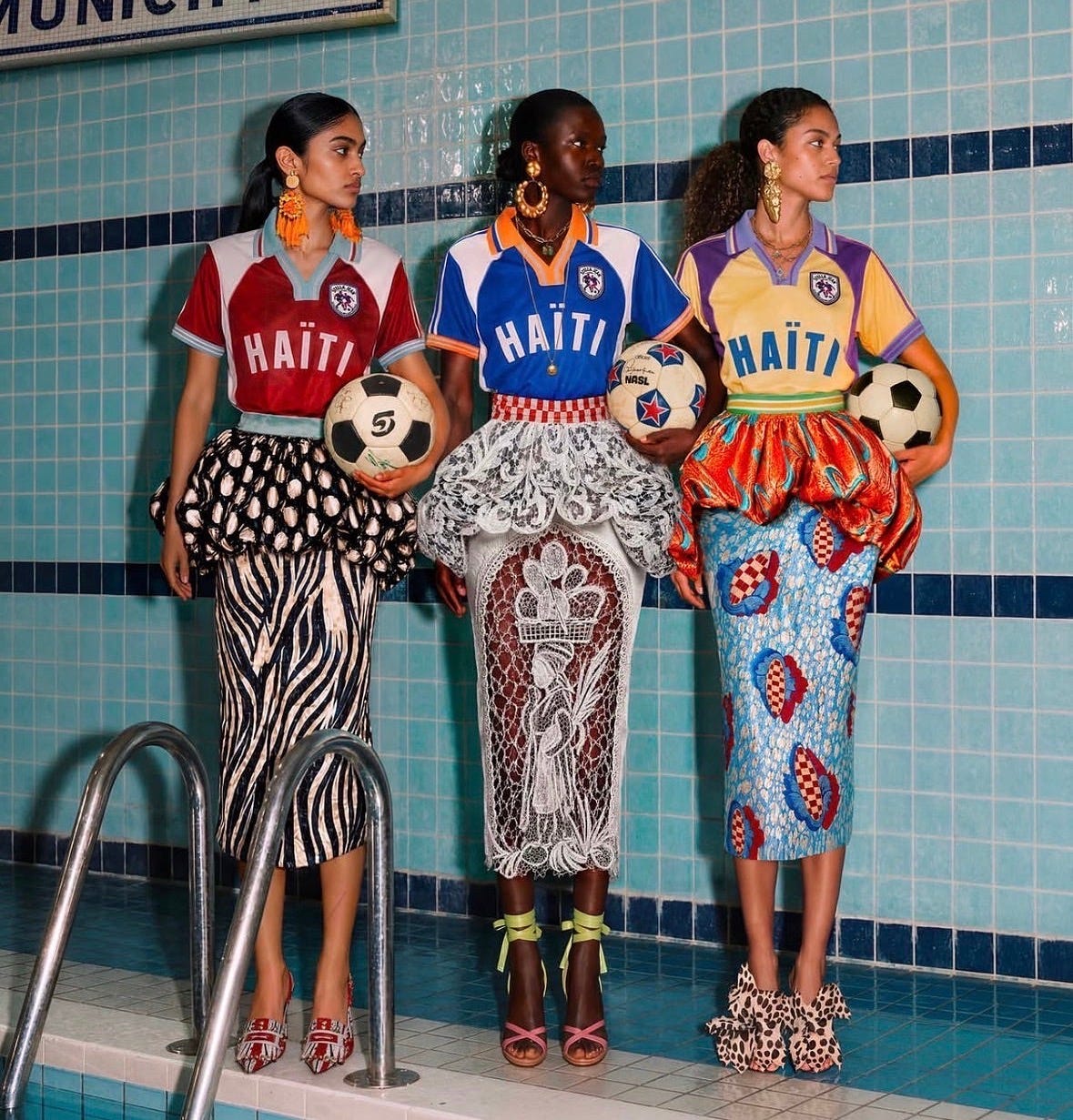
Fast forward to 2026 and the World Cup is beginning this week in North America. To celebrate Haiti joining the tournament for the first time in 52 years, Stella created a sports jersey t-shirt and paired it with a couture skirt. This is a Stella signature. Perfect tailoring and a t-shirt, high craft mixed with street and ceremony. While scrolling through her Instagram, the captions stop me because they are doing what most fashion brands completely fail at: telling the truth about what clothes actually are.
“Pairing this T-shirt with our 2015 statement raffia skirt, we borrow a French word: durabilité — stronger than sustainability, even if that is its translation. Its root? The verb durer: to last, to endure. Fashion only becomes culture when it refuses to be ephemeral. If you can’t make it work, it’s not your wardrobe — it’s your creativity. Creativity is, after all, sustainability’s first ally. Reuse. Revamp. Restyle. Endlessly.”
Most brands treat archives as nothing more than nostalgia. She treats them as vocabulary. The clothes say it, but so do the words.
On the hand-embroidered skirt coming for Spring/Summer 2027:
“Not all scarcity is manufactured. Some is human. Entirely embroidered by hand in Italy, each piece exists at the pace of the women who make it. Its value is not dictated by the market. It is dictated by craftsmanship. The future belongs not to what can be scaled, but to what cannot be replaced.”
These words land differently when you’ve spent years watching the industry use the same language to say nothing. Here’s what I know about sustainability in fashion through my own lived experience. I received a Master’s in Sustainable Fashion from Polimoda in Florence, Italy, and spent several years at a global cotton farming sustainability program learning that financial sustainability will always be the priority. Ultimately what I gathered is that if it hits the bottom line, no matter how many people it could benefit or how much less environmental impact would be made, it’s a non-starter.
From its earliest industrial incarnation, the clothing industry was built on the extraction of labor, land, and culture. The word “sustainability”, which never had a commonly agreed upon definition, became the industry’s permission slip to keep doing exactly what it was already doing, just with better PR.
By pairing pieces from old collections with new ones, Stella reveals a philosophy of time that says what she makes is meant to last. It doesn’t need to be made from a certified fiber to carry what makes the clothes worth keeping: the cultural memory, craft, and story. In a social media caption, she makes the argument I spent years trying to articulate, all while showing an eleven-year-old skirt that still looks extraordinarily modern.
This is the distinction the fashion industry refuses to acknowledge because it would destroy the entire business model: the difference between clothes and culture. Clothes are consumed. Culture is kept. Even better, when multiple cultures converge in a single piece of clothing, you can read a moment in human history from the seams. Understanding fashion as a tool, not solely an aesthetic landing point but also as a megaphone, Stella is a carrier of meaning between cultures. Through her Laboratorio delle Nazioni (Laboratory of Nations), she’s co-created with women artisans whose cultural traditions were at risk of disappearing. For example, the Kalash women of Pakistan embroidered their traditional motifs for an international audience for the first time in history. The garments that come out of these collaborations aren’t inspired by these cultures, they’re made right alongside them.
I grew up in Florida in a diverse, international environment. Part of why Stella’s work resonates so deeply with me is because I too have been shaped by multiple cultures. I had Haitian classmates and colleagues who shaped how I understand their part of the world. The Haiti shown in the news bears almost no resemblance to the Haiti they described, or to the one Laurent Dubois writes about in Haiti: The Aftershocks of History. The revolution of 1791, the first Black republic, the debt imposed by France as punishment for having the audacity to be free. And still, the relentless narrative of crisis that flattens one of the most culturally rich nations in the Western hemisphere into images of natural disasters, instability, and continuous crisis. This has been the accepted narrative because presenting the full historical context would instill in the viewer that, despite being up against the most powerful military at the time, liberation from systems of harm is actually possible.
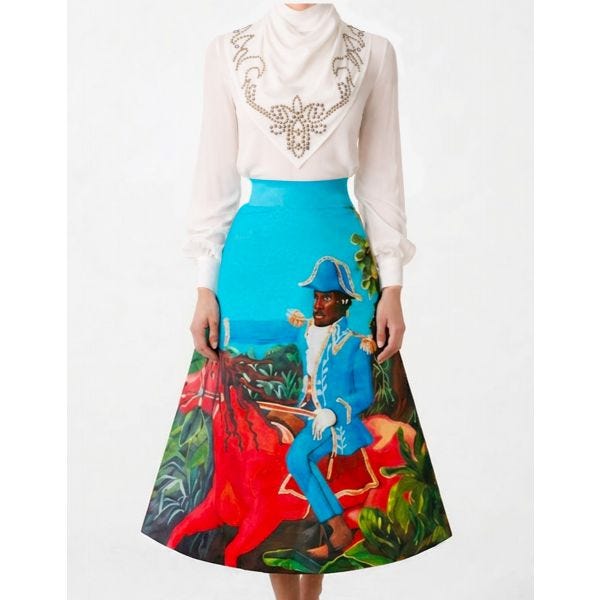
When Haiti’s athletes walked into the Milan Cortina 2026 Winter Olympics opening ceremony wearing her designs, the looks went viral. Team Haiti’s uniforms originally featured Toussaint Louverture, the former slave who organized the revolution that eventually founded Haiti in 1804; however, the IOC ruled that the image of Louverture violated Olympic rules because it depicted a political symbol. What they don’t realize is fashion is inherently political.
Just when I start to feel I’m over fashion entirely, my hope is restored because of designers like her who have substance and who understand that what we wear is never just what we wear. Stella Jean has been building her brand the way Haiti fought for independence: with everything, and on her own terms. That’s the future of fashion: decolonized, durable, and worth fighting for.
Sara Phillips Chiappetta is a writer, brand builder, and creative based in Rome. She holds a Master’s in Sustainable Fashion from Polimoda and previously worked in global communications at the Better Cotton Initiative and in the US Federal Government. She is the founder of Flora et Alchimia, a botanical perfumery workshop experience in Rome rooted in ancient Roman botanical culture. She writes about building a life around work that means something and showing it to the world.
Find her at saraphillipschiappetta.com \ saraphillipschiappetta@gmail.com
I know zero about fashion, but I can tell you that her clothes resonate with life! I love the boldness and intentionality!